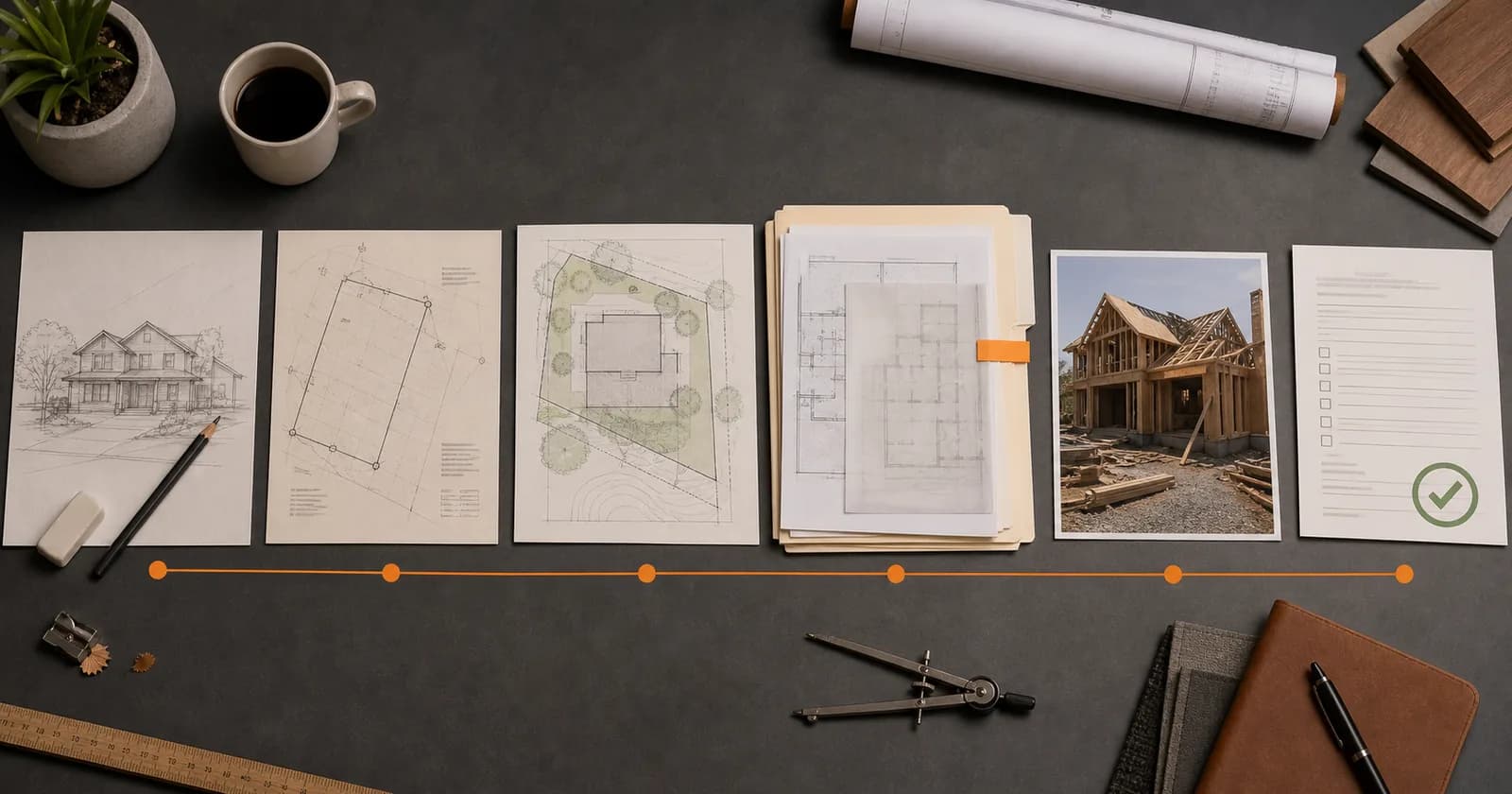
A contractor sits at a kitchen table in a west-suburban village with a tape and a legal pad, working up a number for a detached garage. The homeowner listens to the price without much reaction, then asks the question she actually cares about. How long before you can start?
He says three weeks. He says it the way people say things they have said many times, and it is not a lie. Some of his permits do come back in three weeks. Some come back in three days. One of them, two summers ago, took most of a season.
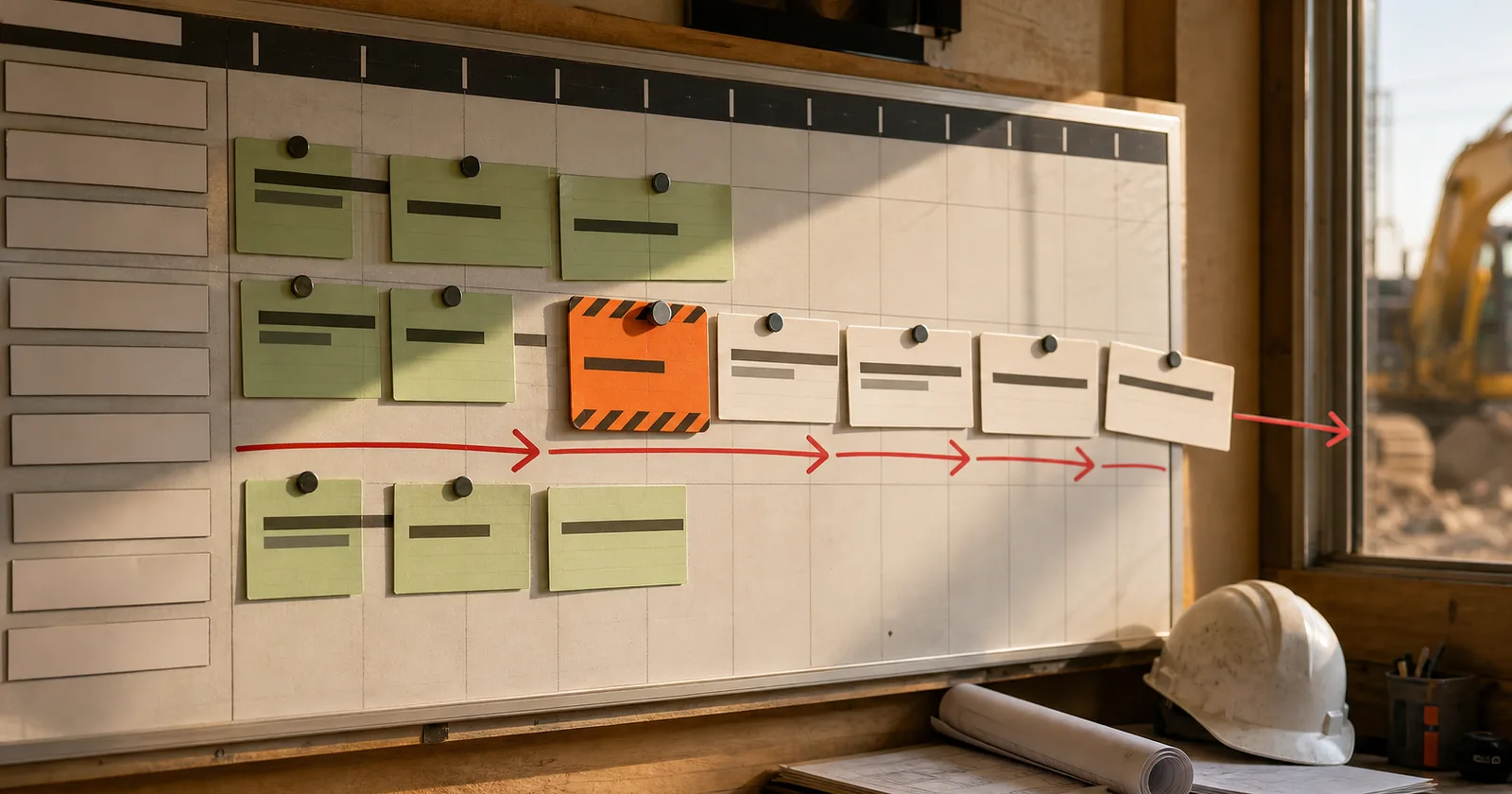
That spread is the entire problem. Permit timelines are not one number with a little noise around it. They behave like two populations sharing a name: a large group that clears quickly and a smaller group that does not clear for a long time. An average sits between them and describes neither.
The City of Chicago publishes every permit it issues along with a processing time, which makes it one of the few places where the shape of that spread is visible instead of anecdotal.
The median is fast and the tail is brutalThe median is fast and the tail is brutal
Start with the whole year, undifferentiated.
32,032
permits issued in 2025
6 days
median processing time
Half of issued permits cleared in less.
83 days
90th percentile
One in ten took at least this long.
Source: Permitech analysis of the City of Chicago Building Permits dataset, 2025 issued permits
Analysis by Permitech
Processing time is the source-reported field and varies by review path, project type, application completeness, and corrections. With that said, the gap between 6 and 83 is not measurement noise. It is the difference between a work week and most of a quarter, sitting inside the same statistic, and 23.0% of issued permits took 30 or more days.
So the median answers "what usually happens" well and answers "what should I promise a customer" badly. Most people asking about permit timelines want the second answer and accept the first. For the whole sequence a project moves through before that clock even starts, the path from idea to construction lays it out step by step.
Three review paths, three different calendarsThree review paths, three different calendars
Splitting the same year by review path explains most of the spread. These are separate lines with separate staffing and genuinely different work in them.
Chicago permit processing time by review path, 2025
Issued permits only. Median and 90th percentile, in days.
Source: Permitech analysis of the City of Chicago Building Permits dataset, 2025 issued permits
Analysis by Permitech
Free to cite with attribution to Permitech and a link to this page. Republishing the chart or the underlying table without attribution is not permitted.
View the data
| Category | Median (days) | 90th percentile (days) |
|---|---|---|
| Express Permit Program | 3 | 21 |
| Self Cert | 32 | 129 |
| Standard Plan Review | 77 | 257 |
The express path handled 20,427 of the 32,032 permits issued that year. Standard plan review handled 3,636, self certification 3,032. That distribution is why the citywide median reads 6 days: it is mostly reporting on the express lane, because that is where the paper goes.
Look at standard plan review on its own and the picture inverts. A median of 77 days is not a delay, it is the normal operation of that lane. The 90th percentile at 257 days means one standard review in ten consumed most of a calendar year. Anyone quoting a spring start on a project headed for that path is quoting a fiction.
Project type tells the same story from a different angle. Renovation and alteration permits ran 53 days at the median and 204 at the 90th percentile. New construction ran 58 and 221. Both sit far from the citywide 6, because both tend to land in the slower lanes.
Your lane is decided before you fileYour lane is decided before you file
The uncomfortable part is that lane assignment is not something you negotiate at the counter. It follows from scope, and scope is set at the kitchen table.
Work that is small, well defined, alters no structure, and disturbs no exterior footprint tends to route to a fast path. Work that adds a structure, moves a wall carrying load, changes the footprint on the lot, or touches drainage tends to route to full plan review. Self certification is a third thing: a licensed design professional takes on responsibility for code compliance, which trades one kind of review for a different prerequisite and, in this data, still ran a 32 day median.
Two things follow. The timeline question is answerable far earlier than most people ask it, because the determining factor is known as soon as the scope is. And scope creep is a schedule event, not just a budget event: a deck that grows a roof, or a remodel that starts moving a bearing wall, can shift the file into a different lane after everyone agreed on a start date.
What actually adds days once you are in the queueWhat actually adds days once you are in the queue
Four things stretch a review, and only two of them are yours to control.
Completeness at intake. Many departments screen for a signature, a license number, or a required sheet before the file reaches a reviewer. A file that fails that screen was never in line at all, which is how people lose two weeks and believe they were waiting on review. One missing page is the whole mechanism.
Correction cycles. A resubmittal generally re-enters the queue instead of picking up where it left off. That makes each additional cycle roughly a full review's worth of calendar time, and most of what triggers comments is administrative rather than technical. The common reasons permits come back are readable from the outside and largely preventable.
Multi-department routing. A file that has to satisfy zoning, structural, water or sewer, fire, and forestry accumulates queue time at each desk, and any one of them can issue its own comments. The number of desks matters more than the size of the job.
Seasonal load. In the Midwest, decks, roofs, additions, and garages all arrive in the same few weeks each spring. The same application filed in February and in May does not experience the same queue.
The dataset only counts the permits that made itThe dataset only counts the permits that made it
One honest limitation, and it flatters the numbers.
Everything above describes issued permits. Applications denied, withdrawn, abandoned, or never issued are not in the file at all. Neither is the time before submittal, when someone is still working out whether the work needs a permit, which jurisdiction has authority over the address, and what belongs in the packet.
So the published median describes applicants who eventually got a permit, timed from the moment their file was accepted. The question most people are actually asking, how long from deciding to build until legally starting work, runs longer than any of these figures. A project stalled because the owner cannot produce a plat of survey, or one that has to go get a variance first, leaves no trace in the processing time column.
Outside the big city, the clock runs differentlyOutside the big city, the clock runs differently
Chicago is a large department with published data, formal review paths, and a portal. Most of Illinois, Wisconsin, and Indiana is not that. Across the 7,000-plus jurisdictions Permitech covers in the three states, the common case is a small department where one or two people handle intake, review, and inspections, sometimes part time.
Smaller does not reliably mean slower. A village where the building official reviews a shed application the afternoon it arrives beats any big-city express lane. What smaller means is less predictable and far less documented: no published median, no queue position, no status page. Whether an answer takes an hour or a month can come down to whether the one person who reviews accessory structures is in that week.
Two neighboring villages, same 24 by 24 garage, same drawings, and the calendars are not comparable. That is the planning problem across the region, and the Illinois permit guide and the Wisconsin guide are where to start on what a given jurisdiction expects.
Quoting and scheduling against the tailQuoting and scheduling against the tail
The practical move is to stop quoting one number and start quoting a structure.
- Identify the review path before quoting a start date, using the scope you actually intend to build
- Quote a range, and tie the start date to permit issuance rather than to a calendar date
- Assume at least one correction cycle on anything routed to full plan review
- File before the spring surge if the project allows any flexibility on timing
- Confirm every department that has to sign off, not the building department alone
- Have the survey, the site plan, and the license numbers in hand before submitting, not after the first comment letter
- Keep the concrete order and the sub schedule uncommitted until the permit is issued
Correction cycles are where the biggest savings sit. On a project already headed for a slow lane, one avoidable comment letter can add as much calendar time as the original review. The downstream cost of a stalled permit shows up as idle crews and delayed invoicing long before it shows up as a fee.
Where the wait actually gets shortenedWhere the wait actually gets shortened
The queue is not yours to speed up. What is yours is everything on either side of it: knowing which lane the project lands in before you promise anything, and submitting a packet complete enough that it goes through once.
That is the work Permitech does as the permit intelligence ecosystem for construction. AI and human permit technicians work the same file. The AI research pass pulls requirements for an address and scope in about three to five minutes, a full requirements set lands in roughly half an hour, and a permit technician then verifies it over one to four hours. What comes back is a Permit Package: the verified requirement set organized in a Permit Workspace, with a Permit Application Reference Sheet holding the answers the application asks for, which you copy onto the building department's own form. To hand the filing off entirely, Permit Concierge runs it.
None of that changes what a reviewer does or how long the queue is. It changes which lane you knew you were in, and how many trips through it you take. Once the permit issues the next clock starts, and the inspection sequence carries its own scheduling rules worth reading before the first pour.