It is the second week of May. The board is full through August, four crews are staged, and a rear-yard deck is the Tuesday start that holds the whole week together. The homeowner signed in March. The lumber is on the truck. At 6:40 in the morning the crew lead texts to ask which address he is driving to.
The permit is not issued. It went in five weeks ago, came back with one correction on the site plan, and went back out nine days later. Nobody at the village is dragging their feet. The file simply re-entered the queue behind everything else that landed that week.
That is the moment a permit stops being a fee you pass through and becomes your calendar. The fee is the smallest number in the entire transaction. What the permit really controls is when a crew can be productive, and in a Midwest season with a hard end date, productive days are the only inventory you have to sell.
One week of delay never costs one weekOne week of delay never costs one week
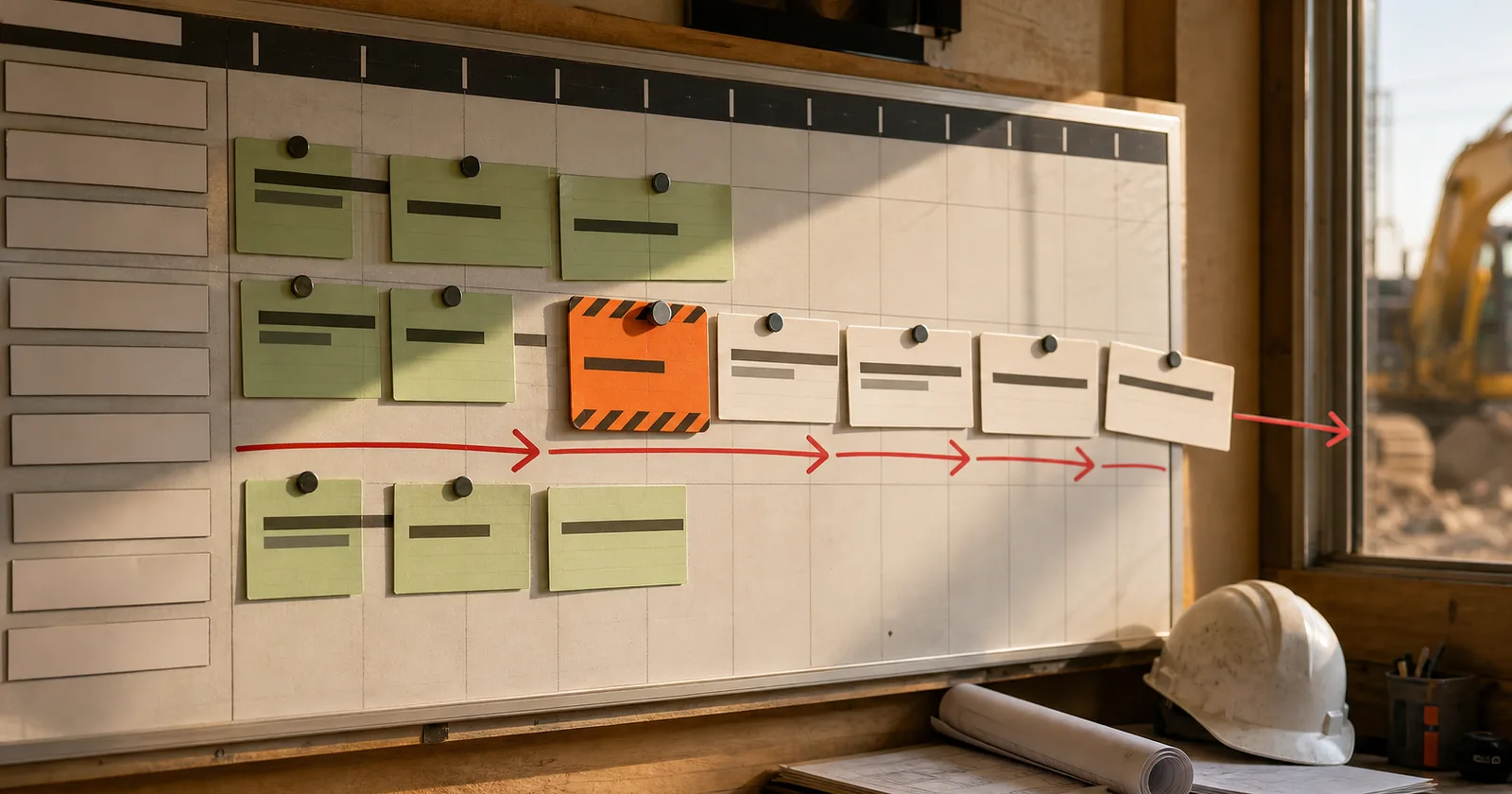
Move Tuesday's deck and the crew does not sit still for five days. They get slid onto the job scheduled for the following week, which was scheduled then because its own approval was expected then. The dumpster arrives early. The material drop arrives early and sits in a driveway the homeowner was not expecting to lose. The third job compresses against the fourth.
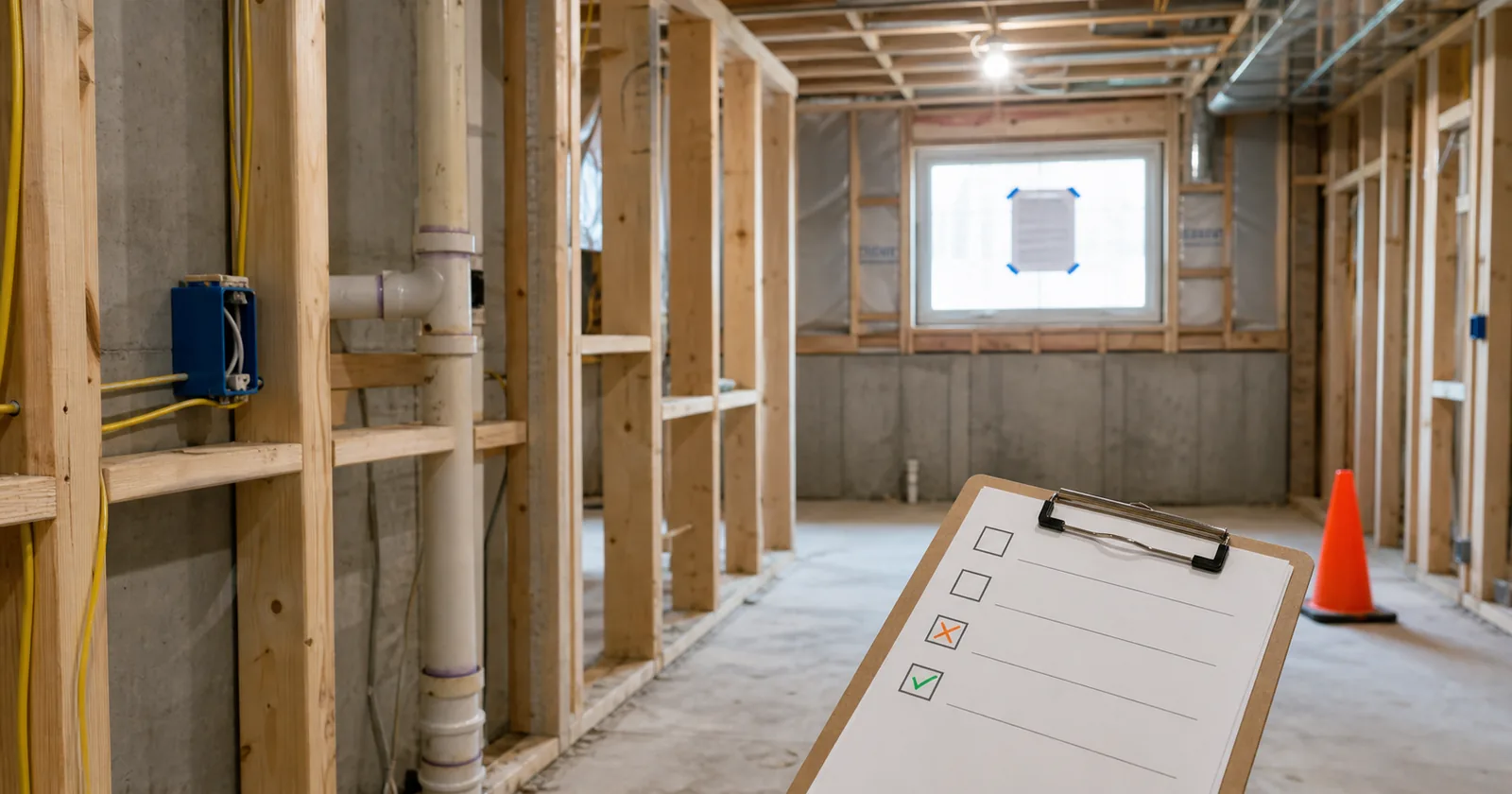
Every shift gets absorbed by borrowing against the next slot, and the borrowing continues until something falls off the end of the board. In a seasonal market it always falls off the end. Footings have to be excavated and inspected before the pour, and once frost is in the ground, excavation turns slow and expensive. Frost depth requirements across Illinois, Wisconsin, and Indiana put footings well below grade, which is routine in July and punishing in late November.
The last job on the board is not delayed. It is moved to spring.
Crew utilization is where the money leaksCrew utilization is where the money leaks
A crew costs the same whether or not it is on a site. Payroll runs, the truck is insured, the trailer is financed. The only thing that changes day to day is whether those hours produced billable work.
Utilization is the number that quietly decides a season. A four-crew operation where every crew gives up one day a week across a thirty-week season has handed back 120 crew-days, which is most of a fifth crew you never got to bill. And idle time is rarely one clean idle day. It shows up as half days, drive time to a site that turns out not to be ready, and a crew burning hours on punch list work that could have waited two weeks.
Contractors working across multiple Illinois jurisdictions feel this hardest, because every village runs its own intake, its own submittal list, and its own review rhythm. Three jobs in three towns means three separate clocks, and no one of them tells you anything about the other two.
Milestone billing turns a permit into a cash flow problemMilestone billing turns a permit into a cash flow problem
Most residential contracts bill on milestones. A deposit at signing, a draw at start or at rough-in, the balance at completion or final inspection. That structure is normal and it works, right until the first milestone is gated by something outside your control.
The deposit came in during March. By April it is not cash anymore, it is lumber, hardware, and a concrete pour already on somebody's schedule. When the permit slips, deposit float stops working for you and starts working against you. Material is bought and aging in a yard, the next draw is unreachable, and Friday payroll for a crew you cannot deploy is due either way.
Pulling permits far ahead does not solve it cleanly either. Many jurisdictions expire a permit if work does not begin within a set window, or if no inspection is called for a stretch of months, so a permit pulled too early can run out its own clock before the crew ever shows up. The goal is not early. The goal is predictable.
The homeowner blames you, not the villageThe homeowner blames you, not the village
A homeowner does not experience a plan review queue. They experience the date you gave them, and the date came and went.
You can explain the correction cycle honestly and in full detail. It rarely changes how the delay feels on their end, because they hired a professional to handle exactly this part. Every extra week is another week of a torn-up yard, a canceled party, a neighbor asking when the trucks are coming back. Cancellations, deposit disputes, and one-star reviews come out of that gap, and none of it appears anywhere near the permit fee on your job cost sheet.
Contractors who keep a customer's trust through a delay are the ones who set the expectation before signing. A start window instead of a start date. A named permit step the customer can see on the schedule. A line in the contract saying the schedule begins at permit issuance, not at signature.
Where the weeks actually goWhere the weeks actually go
Plan reviewers are not the bottleneck most contractors assume they are. In a typical residential department, a complete and correct application moves reasonably well. The weeks disappear into correction cycles instead: the packet goes in, something is missing or ambiguous, it comes back, it gets fixed, and it re-enters the queue at the back.
Two rounds of that turn a routine approval into six weeks, and the triggers are boringly consistent from town to town. An outdated plat of survey. A site plan with no dimensions to the property line. Contractor registration that was never filed with that specific municipality. Structural details drawn at a level the reviewer cannot sign off on. One missing page does the same damage as ten, which is the part contractors underestimate. There is no partial credit at intake.
That distinction shows up in the public record. Across issued permits in Chicago last year, half cleared in under a week, but the slowest tenth ran past eighty days. Planning against the median is planning against the good half of your own year.
6 days
Median processing time
32,032 permits issued in 2025
83 days
90th percentile
Nearly fourteen times the median
23.0%
Took 30 days or more
Roughly one permit in four
Source: Permitech analysis of the City of Chicago Building Permits dataset, 2025 issued permits
Analysis by Permitech
Processing time here is the source-reported field, and it varies by review path, project type, and how complete the application was on arrival. The dataset also counts issued permits only, so files that died in correction cycles are absent from it. Both caveats push the real tail longer, not shorter. One permit in four crossing thirty days is not an outlier you can schedule around. It is a quarter of your calendar.
Quote the permit like a tradeQuote the permit like a trade
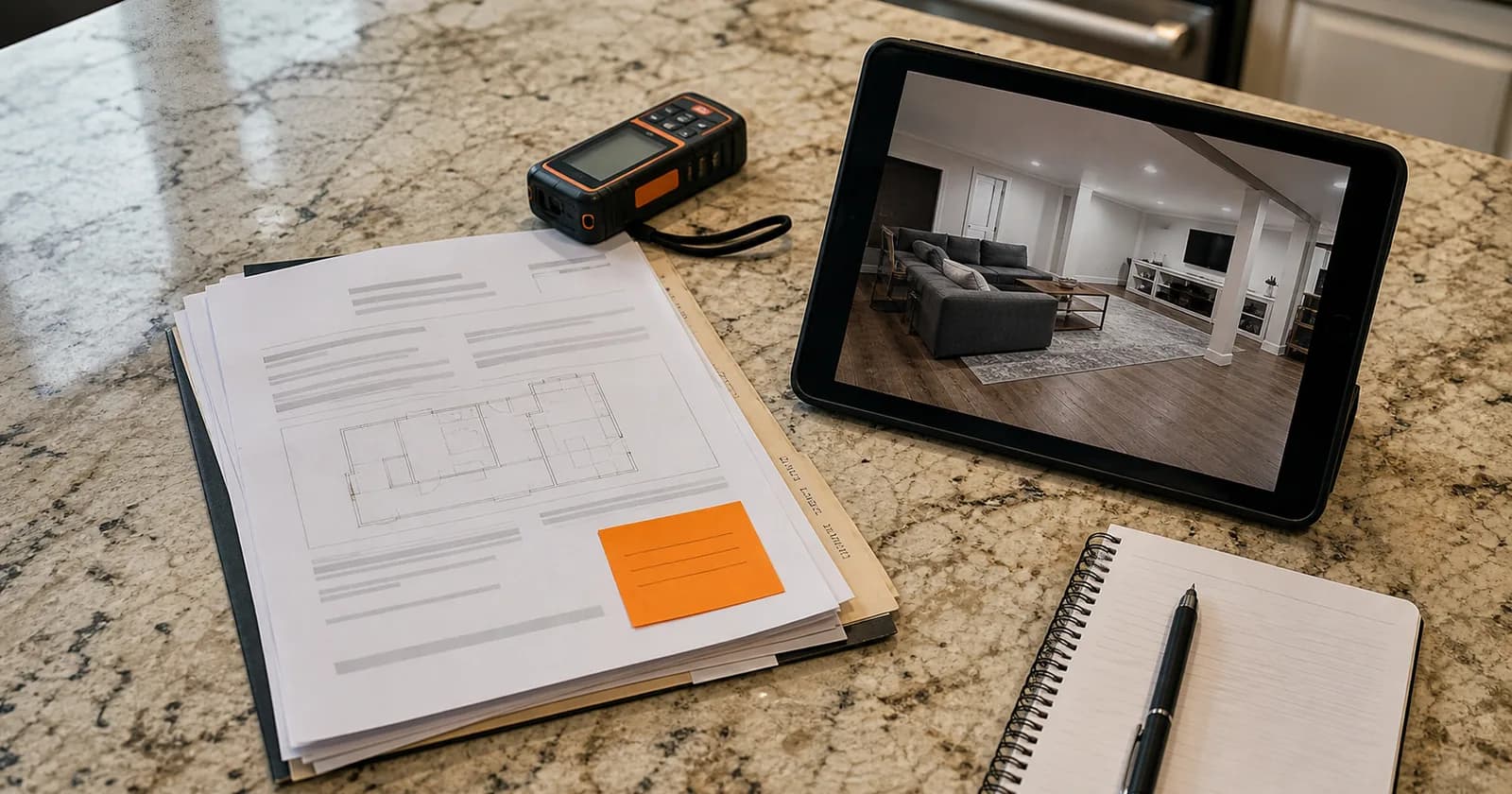
Nobody bids a job without knowing whether it needs an electrician. Permit requirements deserve the same treatment: known before the number goes on the proposal, not discovered three weeks after the deposit clears.
That means resolving which authority reviews the address, whether zoning approval runs separately from construction review, what the submittal list contains, and which trades pull their own permits. All of it is knowable in advance. Most of it is knowable in minutes.
- Reviewing authority confirmed for the exact address, not the mailing city
- Current plat of survey showing existing structures, not the copy from the closing folder
- Site plan dimensioned to every property line, with easements shown
- Contractor registration or license current in that specific jurisdiction
- Certificate of insurance in the form that department requires
- Confirmation of whether zoning approval runs before or alongside construction review
- Structural details at the level that reviewer expects to see
- Owner name and parcel information matching the tax record
Collect that at contract signing and the permit clock starts on day one instead of day twelve.
It helps to price the two halves separately, because most contractors only ever count the first one. Running ten permits through an internal coordinator at a loaded rate of about $22.50 an hour, the research and submission labor is real but modest. The intake wait, valued at roughly $180 of carrying cost per business day, is the part that dwarfs it.
Cost of running ten residential permits in-house
Illustrative scenario, not a vendor quote or a market benchmark. Assumes a $22.50 hourly loaded rate, 20 to 40 research and submission hours, and 10 to 30 business days of intake wait carried at $180 per day. Actual cost moves with staff rate, owner time, and how often files come back.
Source: Permitech internal permit-operations model
Analysis by Permitech
Free to cite with attribution to Permitech and a link to this page. Republishing the chart or the underlying table without attribution is not permitted.
View the data
| Category | Low estimate (dollars) | High estimate (dollars) |
|---|---|---|
| Research and submission labor | 450 | 900 |
| Intake wait time carried | 1,800 | 5,400 |
| Total per ten permits | 2,250 | 6,300 |
Waiting costs four to six times what the paperwork costs. That ratio is the argument for treating permit timing as a scheduling input rather than an administrative afterthought, and it is why shaving a correction cycle is worth more than shaving an hour of data entry. The labor bar is the part you can see on a timesheet. The wait bar is the part that shows up as an idle crew and a slipped invoice.
What predictable timing is actually worthWhat predictable timing is actually worth
Permitech is the permit intelligence ecosystem for construction, built around this exact failure point. AI research resolves the reviewing authority and pulls requirements for an address in about three to five minutes, with a full requirements set landing in roughly half an hour. A human permit technician then verifies it, which takes one to four hours. What comes out is a Permit Package: the verified requirement set, a Permit Workspace for assembling the submittal, and a Permit Application Reference Sheet you copy onto the building department's own form.
Coverage runs across more than 7,000 jurisdictions in Illinois, Wisconsin, and Indiana, so a contractor working three towns is not running three separate research projects. When a permit needs to leave your desk entirely, Permit Concierge handles managed filing, which works differently from a traditional permit expediter.
None of that makes a review queue move faster. What it does is make the front half of the process boring and predictable, which is the half you control. A packet that goes in complete does not come back. A permit that does not come back does not move a crew slot. A crew slot that holds is the difference between a full season and a board that quietly sheds its last three jobs to weather.
If you want that number sitting next to your cost per crew-day, see what a Permit Package costs.