It is a Tuesday in April and a garage builder is sitting in his truck reading four leads on his phone. All four arrived overnight from a shared lead service. All four say roughly the same thing: detached garage, interested, call soon.
He calls the first. Voicemail. The second picks up and mentions he already spoke with two other companies that morning. The third wants a number over the phone for a structure nobody has measured. The fourth turns out to be pricing a stick-built garage against a prefab kit and has no idea the two are different products.
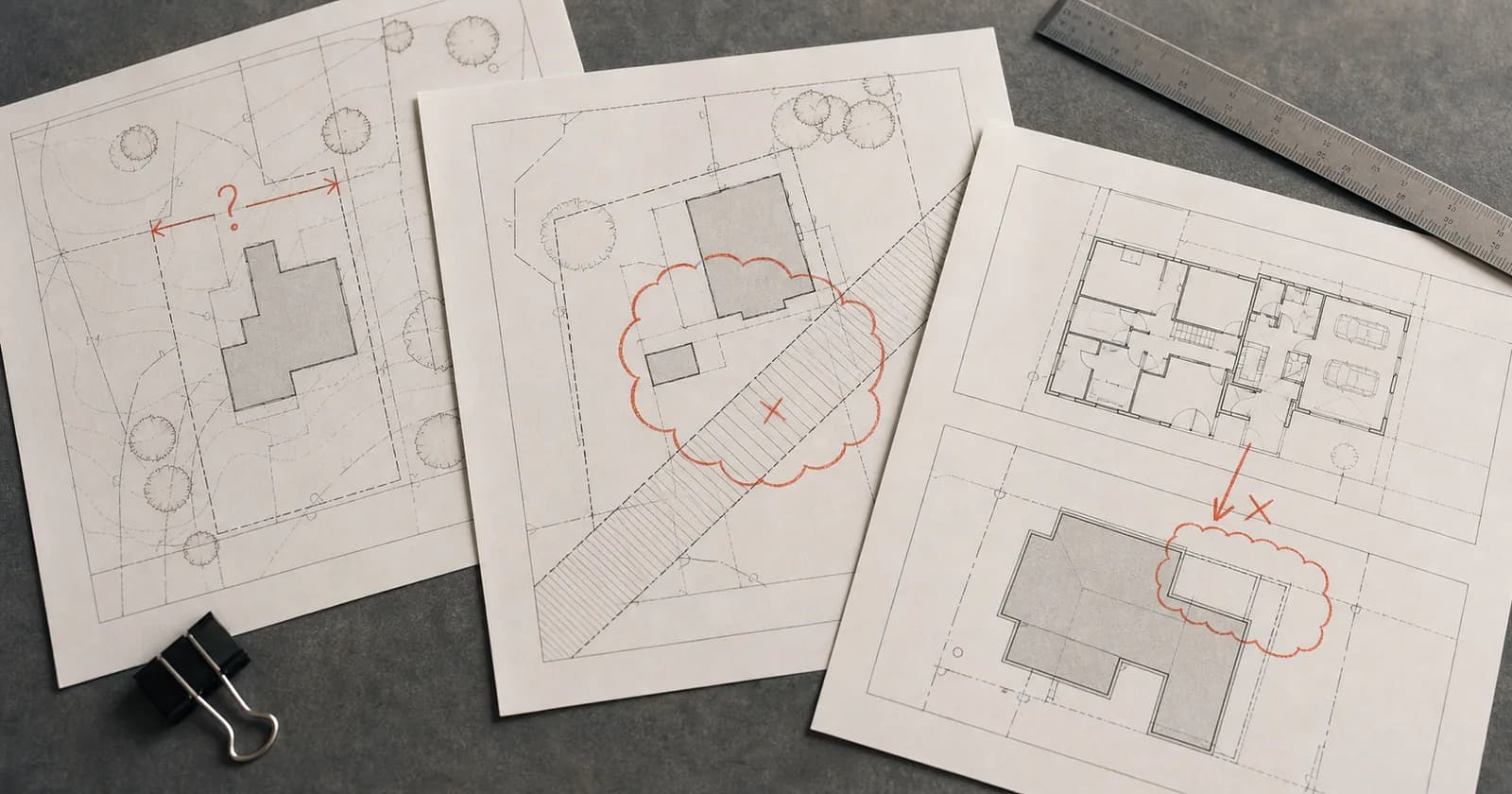
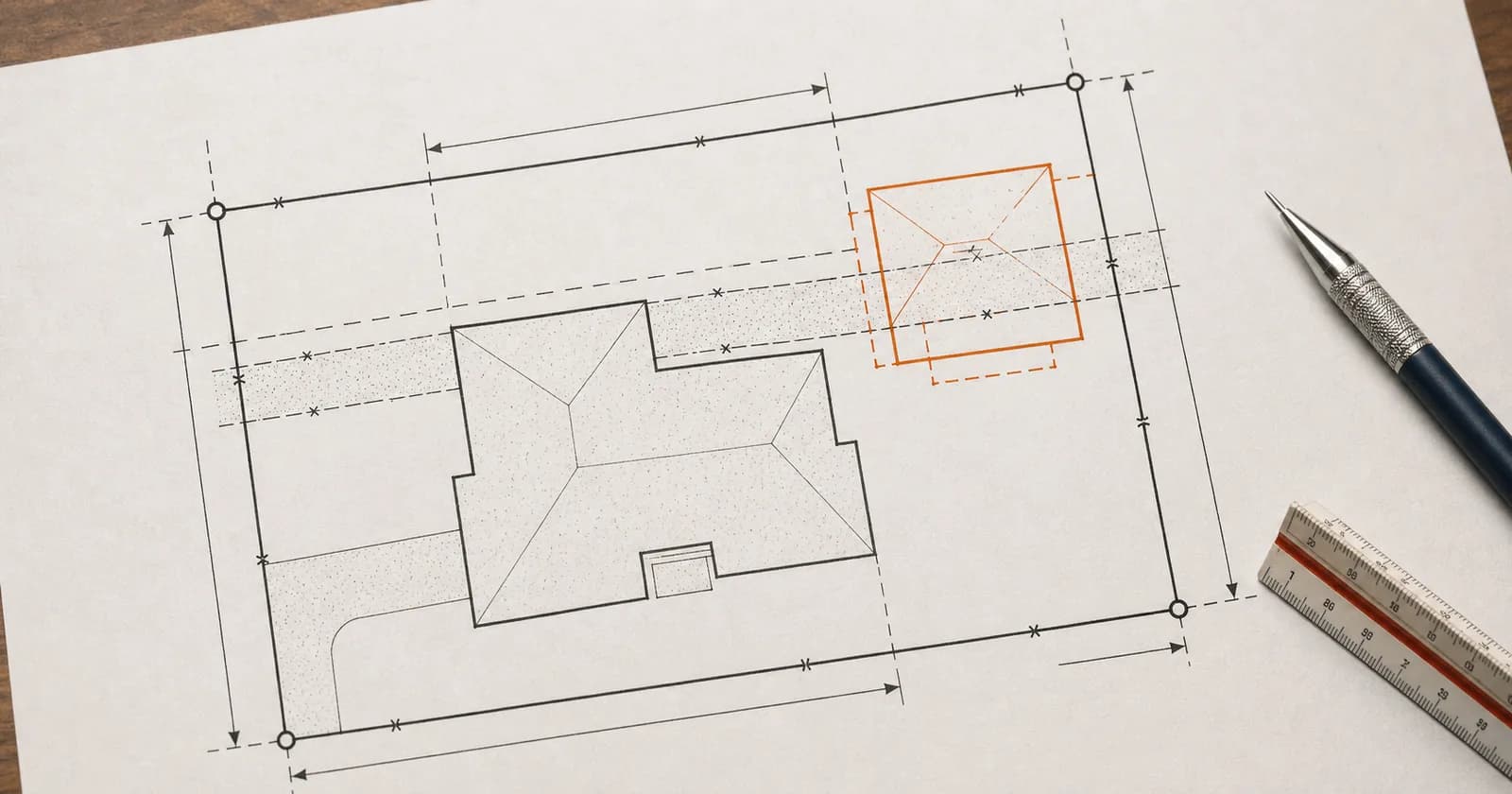
Two towns over that same morning, a different homeowner has a plat of survey spread across her kitchen table. She has settled on a 24 by 24 detached garage. She has picked the corner of the yard. What she is stuck on is whether the slab clears the rear setback, and whether the utility easement running along the back lot line rules out that corner entirely.
She is not shopping. She is blocked. And she is worth more than the morning's four leads combined, because she has an address, a project type, a decision she has already made emotionally, and exactly one obstacle standing between her and a signed contract.
Permit questions carry information a form fill never willPermit questions carry information a form fill never will
A lead form hands you a name, a phone number, and a checkbox. A permit question hands you the shape of the job.
When somebody is working through what a setback actually restricts or trying to read a plat of survey for the first time, four things are already true about them. They own or control a specific property. Their project is defined enough that it has collided with a rule. They are far enough along to feel friction. And they are actively looking for somebody who can resolve it.
That last one is what contractors consistently underprice. A homeowner sorting out whether a garage needs a building permit, a separate zoning approval, or both is not going to be moved by a coupon. They want an answer. Whoever gives them a confident, correct one is usually the person they hire.
The race-to-call model quietly costs you marginThe race-to-call model quietly costs you margin
Shared leads are sold on speed. The pitch is always the same: call within five minutes and you win. What that pitch leaves out is that three or four other companies got the same alert, so the homeowner's first four conversations are all with strangers pitching the same product. The only variable left to compete on is price.
So the bidding starts low, and it starts before anybody has checked the lot.
The lead did not lose him that job. The missing permit facts did. That gap is also where most of the real cost of permit delays hides, because rework and rescheduling never show up on the original bid.
Bad permit assumptions land on your P&L, not the homeowner'sBad permit assumptions land on your P&L, not the homeowner's
This is why permit-stage homeowners are a better starting point than early-stage browsers. By the time somebody is asking about easements, the parcel facts are on the table where both of you can see them.
Four filters decide whether a referral is worth takingFour filters decide whether a referral is worth taking
Not every homeowner with a permit question belongs on your calendar. A referral is only useful when four things line up at once, and any lead source that ignores one of them is selling volume rather than fit.
| Filter | What a fit looks like | How it gets handled |
|---|---|---|
| Geography | The property sits inside the counties you actually service, not two hours past your comfortable drive | Easy to screen |
| Project type | The work matches something you already build and price confidently, not a one-off you would have to learn on | Easy to screen |
| Intent stage | The homeowner has a location, a rough scope, and an active obstacle, rather than a someday idea | Gets skipped, and a homeowner three months from deciding will waste a site visit |
| Capacity fit | You can quote it this month and build it this season without pushing an existing customer | Gets skipped, and a perfect-fit project you cannot start until next spring will waste the homeowner |
The bottom two rows are the ones that decide whether a referral converts, and they are the two that get skipped. A source that matches nothing but trade and territory can still fill your week with work you cannot use, which is the difference between volume and fit.
Capped regional seats beat volume lead listsCapped regional seats beat volume lead lists
Lead marketplaces make money by reselling the same homeowner. That structure pays the seller regardless of outcome and pushes the risk onto the contractor, which is why the same companies keep buying leads and keep complaining about them.
Capping a region flips the incentive. Fewer providers per area means each introduction has to be worth something, because there is no volume to hide behind.
Filler work is the part no lead form asks aboutFiller work is the part no lead form asks about
Ask a shed or garage builder what keeps the year profitable and you rarely hear about the big builds. You hear about the jobs that fill the gaps between them.
Patios and outdoor kitchens, pergolas, and retaining walls are the classic filler work. They are short, they use the crew you already have on payroll, and they slot into the two-week hole a delayed foundation just created. Deck projects and carports behave the same way. So do the smaller interior add-ons a homeowner mentions once you are already on site with a crew.
Every one of those carries genuine zoning exposure. Coverage and drainage rules reach a paver patio, and plenty of districts apply a setback to it as well. A retaining wall over a set height usually picks up its own structural review on top of the zoning check. That is why homeowners research this work the same way they research a garage. That research lands in the same permit-intent stream, and a contractor who sells across all of it sees far more usable volume than one waiting on detached garages alone.
Multi-project contractors convert this better than anyoneMulti-project contractors convert this better than anyone
A one-off homeowner buys once. A contractor running several crews across a few counties buys the same permit answer over and over, which is the difference between a nice-to-have and an operating tool.
Multi-project contractors also absorb variety better. If three garage referrals in a month turn into one garage, one carport, and a retaining wall, that is a good month for a builder with range and a frustrating one for a specialist. Range is what turns intent traffic into booked weeks.
The contractor who already knows the answer wins the callThe contractor who already knows the answer wins the call
That is the actual product underneath the referrals. Permitech is the permit intelligence ecosystem for construction, covering 7,000-plus jurisdictions across Illinois, Wisconsin, and Indiana. The research that stands behind a jurisdiction runs in three stages.
3–5 min
AI research on a jurisdiction
~30 min
Full requirements set
1–4 hrs
Human permit technician verification
Before anything is treated as reliable
Source: Permitech internal permit-operations model
Analysis by Permitech
The machine work happens in minutes. The verification pass is the slow step on purpose, because that is the one that turns a research result into something you can put a number against, and a quote is binding whether or not the rules behind it were checked.
For a contractor, that means walking into a first conversation already knowing which approvals apply and which parcel facts need checking. It means quoting with the coverage and setback math done instead of guessing. And when the filing itself is the part you want off your desk, Permit Concierge handles the submittal and the reviewer comments while you keep building.
If the leads you are buying today feel like the four on that garage builder's phone, the problem is probably the source rather than the follow-up. Look at what Permitech pricing covers if you want the permit work handled for your own projects, apply for a regional seat if you want the homeowner introductions, and read why permits get denied before your next bid, because the misses that kill jobs are smaller and more predictable than most contractors expect.