The number is good. The contractor has walked the yard, taken measurements, and put a price on the back of a business card that lands about where you expected. Then, on his way to the truck, almost like he is remembering an errand: "One thing. It moves quicker if you pull the permit yourself. You own the place. They'll take it right at the counter."
That sounds like a scheduling detail. It is not.
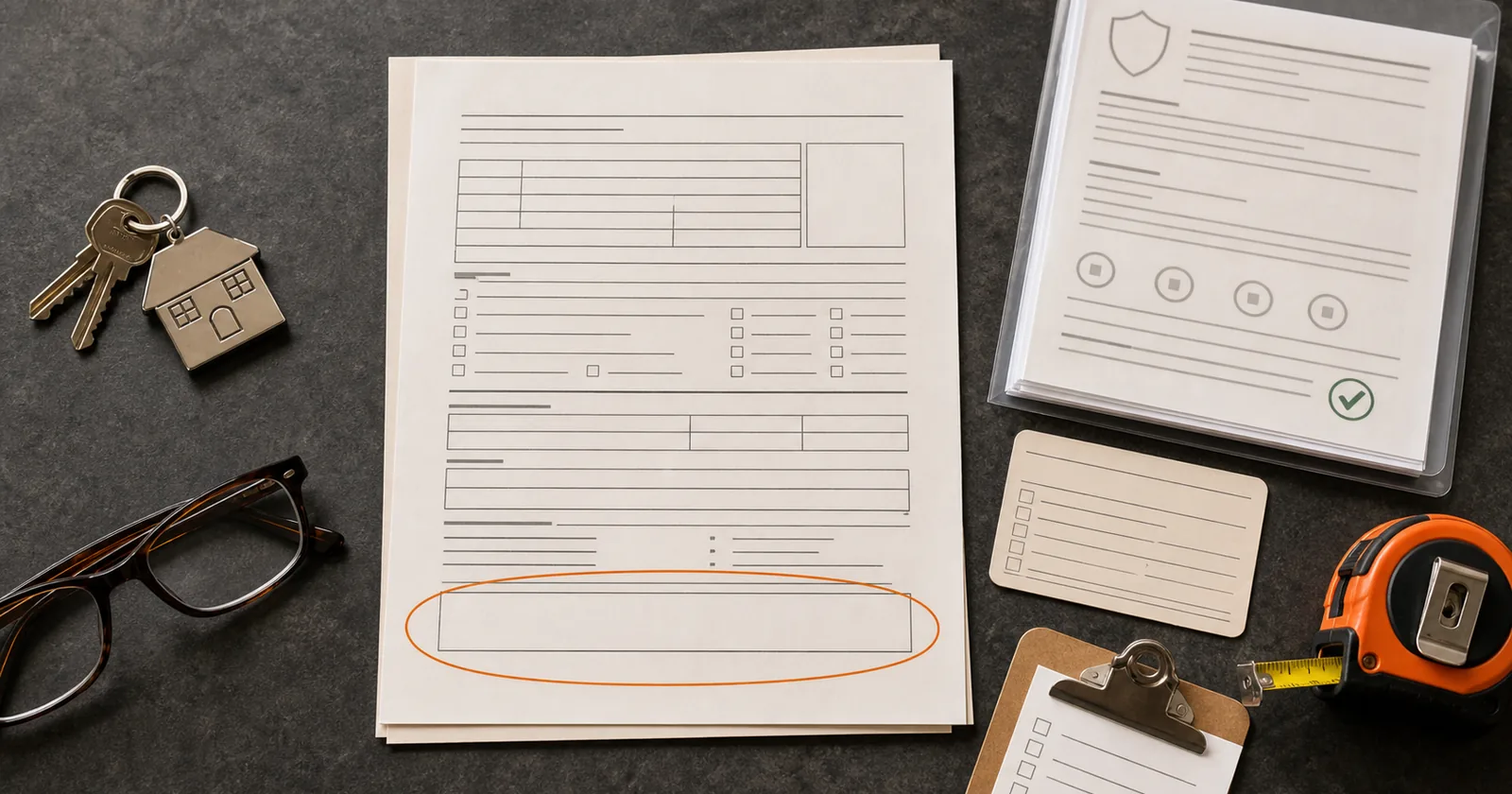
Signing that application makes you the applicant of record, and the applicant of record is the person the building department deals with from that moment until the permit closes. Not the person doing the work. Not the person who priced it. The name on the first line.
Sometimes the request is reasonable and you should say yes. Sometimes it is the most useful thing you will learn about the person you are about to pay a deposit. Both look identical across a driveway.
The name on the application is the name the department callsThe name on the application is the name the department calls
A permit is an open file between the property and the authority having jurisdiction, and that file has exactly one counterparty. Which name sits there decides this:
| What comes up | Permit in your name | Permit in the contractor's name |
|---|---|---|
| Correction notices | Come to you. You fix the work, hire it out, or the permit lapses | Go to a licensed, registered party the department can hold responsible |
| Inspections | You call each one in and provide access | The contractor schedules them |
| Work beyond the approved drawings | You answer for it | The contractor answers for it |
| The permanent record | Public, and it shows you pulled it | Still attached to your address |
Only who answers changes, not what the file needs to close. A building permit without its final is not a finished project in the department's records, whatever the yard looks like.
None of that transfers by handshake. If your name is on the application and the framing fails inspection, the department does not call the framer.
Why a contractor might genuinely want you to signWhy a contractor might genuinely want you to sign
Start with the honest reasons, because they exist and they are common.
Most municipalities require a contractor to be registered locally before pulling permits, and registration is a separate thing from a license. A legitimate roofer can hold a valid state license and still be unable to pull a permit in a village he has never worked in.
For a two-day job across a county line, that math is real. Fee, certificates, sometimes a walk-in during limited counter hours, for one job he may never repeat. Asking the owner to sign is not automatically a dodge.
There is also a version that is not a request at all. Plenty of jurisdictions require the owner's signature regardless of who pulls the permit, because the department wants documented consent from whoever owns the land. Ask whether the line says applicant or says owner.
The version of the request that should stop youThe version of the request that should stop you
The other reasons a contractor wants his name off the file are the ones worth understanding.
He cannot register because his general liability lapsed. He is not licensed for the trade the job actually involves, which happens most often with electrical and gas bundled into a remodel. He has an open violation in that town and a new application invites a conversation he does not want.
You do not have to guess. Ask two questions by text, so the answer is in writing. Are you registered with this village. Can you send me your license number and certificate of insurance.
Someone registered answers both in about ninety seconds, because those documents live in his phone. It is not an accusation either, since his numbers go on the application anyway. Missing or lapsed contractor numbers are a reliable way to get a file bounced before review even begins, as why permits get returned covers.
Nothing there required bad faith. The paperwork decided, in advance, who would pay to find out.
Owner-builder is a real category with real conditionsOwner-builder is a real category with real conditions
Owner-builder is not a loophole. It is a recognized path in most jurisdictions, and for the right project it is the right call. Somebody finishing a room they will live in has every reason to be the applicant of record.
The conditions attached are consistent enough to plan around, though specifics vary and you have to confirm yours. Provisions typically apply to an owner-occupied residence rather than a rental or a flip. Many jurisdictions require a signed affidavit acknowledging the code and inspection obligations and stating the provision is not sheltering unlicensed labor. Some restrict it to single-family property.
What owner-builder never does is lower the bar. Same code, same inspections, same review of the same drawings. Pulling it yourself changes who answers, not what gets asked.
Owning the house does not license you to do the workOwning the house does not license you to do the work
The most expensive misunderstanding in this area is assuming owner-builder status extends to the trades. It generally does not, and the pattern differs by trade.
| Trade | Where the license usually sits | Homeowner exemption |
|---|---|---|
| Gas piping | Licensed plumbing or mechanical contractor | Licensed trade required almost always |
| Plumbing | Frequently the state | None at all in some jurisdictions |
| Electrical | Often the municipality | Usually narrow where a town carries one: your own home, your own hands, no paid helper |
Confirm all three for your own jurisdiction, since one town grants an exemption and the next one does not.
Two distinctions get blurred. An exemption permitting you to perform the work is not the department permitting you to pull the trade permit. And in many jurisdictions the building permit does not carry trade work anyway, so a second permit carries somebody else's name.
Sort that out during planning, not at rough-in.
Inspections land wherever the permit pointsInspections land wherever the permit points
Every jurisdiction runs a sequence and it has to be respected: footing before concrete, rough before cover, final before occupancy. Missing a stage means opening finished work back up, which is why the order of inspections after approval is worth understanding early.
For a homeowner working a day job, that is a real load. Building departments are often reachable only during certain hours on certain days, and the one person who can answer your question is frequently not in. A contractor pulling permits weekly knows that rhythm. A homeowner learns it while the drywall crew waits.
Permits also have a clock. Most expire if work does not start within a set window or if too much time passes between inspections, and how long a permit stays valid is the detail owner-builders miss most.
What follows the property to closingWhat follows the property to closing
Permit records attach to the address, not to the person, and they outlast everybody involved.
An owner-builder permit that was inspected and finalized is clean. Nobody at a closing table cares who signed it. The permits that cause trouble are the ones that expired before final inspection, the ones where work visibly exceeds approved scope, and the ones never pulled at all. All three surface the same way: a buyer's inspector pulls the address history, finds an open item, and it becomes a price negotiation at the worst moment.
Work done without a permit does not become legal by aging quietly, and legalizing unpermitted work after the fact runs on the department's terms. A certificate of occupancy or final sign-off puts the question to bed.
Insurance is its own thread and deserves a call to your carrier. Some jurisdictions treat an owner-builder as the general contractor, which matters if someone gets hurt on the property.
Deciding before you sign anythingDeciding before you sign anything
Run this before the pen touches the application, whichever way you are leaning.
- Confirm which line you are being asked to sign: owner, applicant, or both
- Get the license number, current certificate of insurance, and proof of registration in that specific municipality
- Identify every trade the project touches and which ones need a separate licensed permit holder
- Read the owner-builder affidavit in full, including what it says about paid labor
- Put in the contract who pulls the permit and who pays for corrections
That last item resolves most of the arguments before they start. If you pull it, say on paper who covers a correction caused by his work.
Both paths are legitimate. An owner-builder replacing a water heater has no business paying someone to handle paperwork for a job they are doing themselves. A homeowner hiring out a full remodel usually wants the licensed, registered contractor named on the file. What nobody should do is sign as applicant of record without knowing they did it.
Most of this turns on what your jurisdiction requires, which is harder to pin down than it should be. Permitech is the permit intelligence ecosystem for construction across 7,000-plus jurisdictions in Illinois, Wisconsin, and Indiana. AI research on the address runs in about three to five minutes, a full requirements set lands in roughly half an hour, and a permit technician verifies it over one to four hours.
Your Permit Package holds that verified set in a Permit Workspace, with a Permit Application Reference Sheet carrying the answers the application asks for so you copy them onto the municipality's own form. To hand the filing off, Permit Concierge runs it. Either way, you learn who signs before anybody does.