The counter conversation goes quiet in a particular way when the answer is no.
Not a correction letter kind of no. The staffer has the survey flat on the counter and a finger running down a table of dimensions. The lot is 45 feet wide. The district wants seven feet of side yard. The addition the homeowner already paid an architect to draw needs five. Nothing on the drawing is wrong. It describes something the district does not permit.
Then comes the sentence that sends people down a road they never planned for. You could apply for a variance.
That is true, and it is not a plan. A variance is a discretionary approval granted by a board after a public hearing, judged against a standard most applicants have never read, and denial is an ordinary result. Sort out which of three applications this is before anyone fills out a form.
Three applications wearing one nameThree applications wearing one name
Three approvals travel under the same word at the counter.
| Application | What you are asking for | What you have to prove |
|---|---|---|
| Area variance | Relief from a number: a setback, a height cap, a lot coverage limit, a minimum lot width. The use is already allowed. | Hardship in a physical characteristic of the parcel, not created by you, held to the minimum relief necessary. |
| Use variance | Something the district does not list at all. A contractor yard on a residential parcel. A second dwelling on a lot zoned for one. | A materially harder standard, and plenty of jurisdictions do not authorize the relief at all. |
| Conditional use | A use the ordinance already lists in that district, subject to review of your site. | No hardship. That the parcel meets standards already written down. |
The area variance, also called a dimensional or developmental standards variance, is the most winnable of the three. The use variance is the hardest, since changing what a district allows is a rezoning question.
The conditional use permit, called a special use across much of Illinois, is a different animal in similar clothes. The ordinance already contemplates your use there and wants to look at your site first. In a residential district that commonly means a home occupation drawing customer traffic, a day care, an oversized accessory structure, and increasingly an accessory dwelling unit. You are not asking for an exception. You are asking a body to confirm the site, then attach conditions.
Which one you are in decides what you must prove and who votes.
The hardship has to be in the groundThe hardship has to be in the ground
Nearly every area variance standard asks the board to find that a physical characteristic of the property makes strict compliance unreasonable. Shape. Slope. An odd dimension left by an old subdivision. Rock, or a drainage swale. A building placed decades ago under rules that no longer apply, now legally nonconforming. Something about the dirt.
What the standard does not ask about is the applicant. Redesign cost is not hardship. A family that outgrew the house is not hardship. A quote that only pencils at one footprint is not hardship. The board is not weighing whether you are a reasonable person with a reasonable want. It decides whether this parcel carries a burden the ordinance never anticipated.
Most standards stack three more findings. The condition was not created by the applicant. The relief is the minimum necessary. Granting it will not alter the essential character of the neighborhood.
Wording varies. Wisconsin's unnecessary hardship line, Indiana's practical difficulties test, and whatever an Illinois home rule municipality wrote for itself are not identical, so answer the words in front of you. If the measuring is still fuzzy, setbacks in plain language comes first.
A conditional use answers a different questionA conditional use answers a different question
Drop the hardship idea here. A conditional use application is an evidence exercise against a published list: compatibility with surrounding property, adequate access and parking, no undue traffic or noise, adequate utilities, consistency with the comprehensive plan. Put facts against each one.
The approving body's real authority sits in the conditions. Screening along a shared lot line. A cap on vehicles stored on site. Hours. Conditions attach to the property and stay enforceable, so a violation years later can put the approval back in play.
Which body hears the case and which body votes is set by local ordinance, and the two are often different. A plan commission recommending and a village board voting is a common Illinois pattern. Two meetings, two calendars.
Before assuming any of that, ask the zoning administrator whether the ordinance authorizes administrative relief. Many codes let staff approve a minor deviation, commonly a small percentage of a required setback, with no public process. It is never advertised. You have to ask.
From application to voteFrom application to vote
Names change. The sequence does not. Every stage carries a consequence, and most of them land on the calendar.
| Stage | What it involves | What it costs you |
|---|---|---|
| Pre-application meeting | Ask the planner whether this is a variance, a conditional use, or a redesign that avoids both | Free in most places |
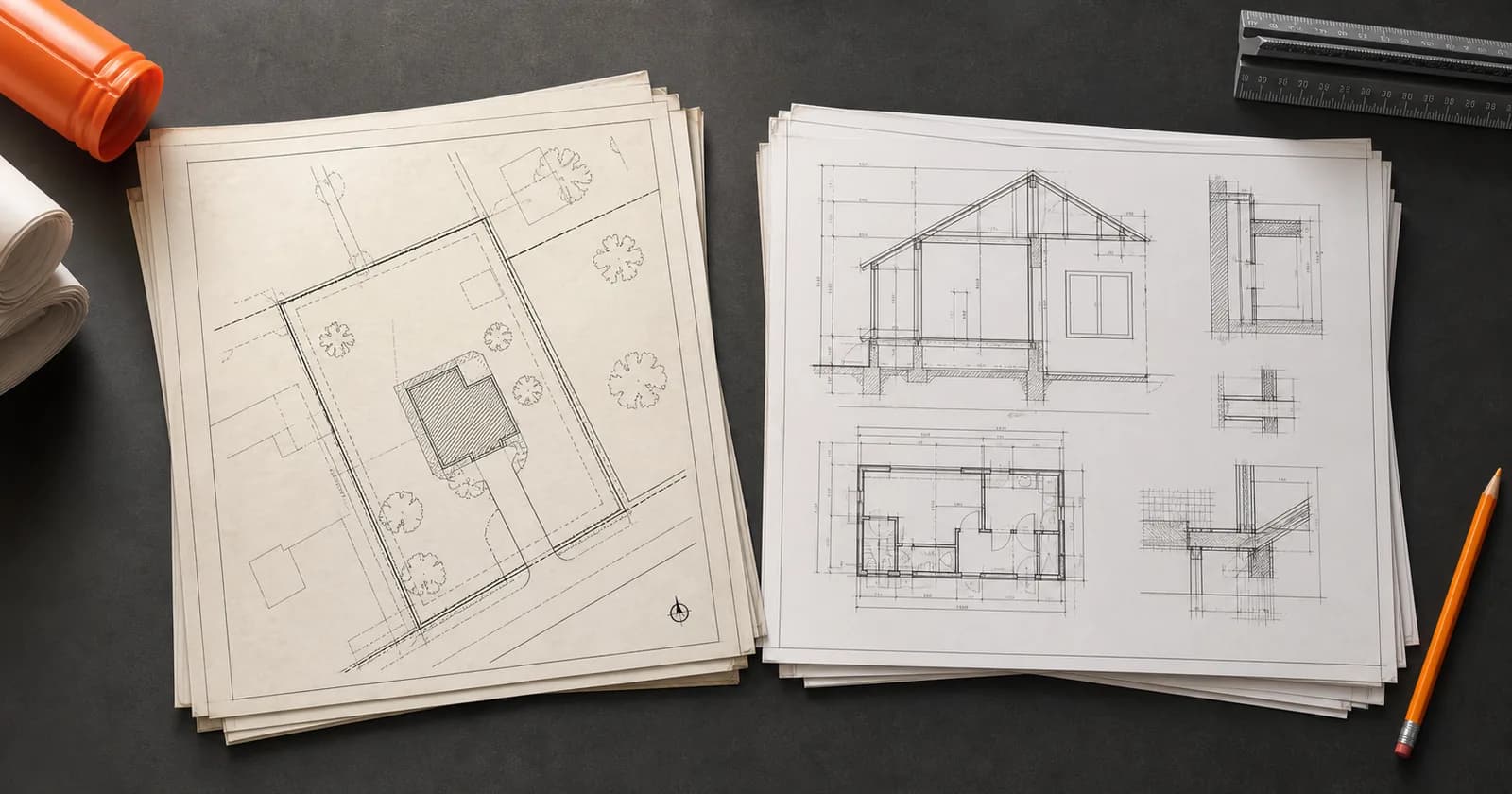
| Application | Form, fee, elevations, a scaled site plan drawn on a current plat of survey, and a written statement addressing each ordinance standard separately, in the ordinance's own order | Applicants skip that last document. Boards read it |
| Staff analysis | Staff measures the request against the same standards and recommends | The board is free to disagree |
| Public notice | Mailed notice to owners within a set radius, a published legal notice, often a sign on the site | Filing deadlines sit weeks ahead of the meeting date. Miss a name and the hearing gets continued |
| Hearing | Testimony under oath in many places. Applicant, staff, neighbors, questions, deliberation, findings, vote | One continuance costs a full cycle |
Notice is what fixes the calendar. The applicant often supplies the certified owner list and pays for the mailing, and notice has to run a set period before the hearing.
Add it up honestly. Boards meet monthly or twice monthly, notice runs ahead of that, and a continuance sends you to the next cycle. Zoning relief is measured in months, not the weeks a building permit review takes.
Findings, denial, and what sticksFindings, denial, and what sticks
The vote is the headline. The findings are the record.
A board is generally required to adopt findings of fact tied to each standard, and those findings are what a court looks at later. Review examines the record built at the hearing rather than starting fresh, so the testimony, the exhibits, and that written statement are the whole case you get to make.
Marginal applications lose, and losing costs more than the fee, because many ordinances bar refiling substantially the same request for a stated period. Neighbors move that math, and a mailed notice is a terrible way for an abutting owner to learn you want to build three feet off their line. Organized opposition rarely changes the standard. It changes how carefully a board applies it.
Approval carries fine print. Relief runs with the land and survives a sale, but many ordinances make a variance lapse if the permit is not pulled within a stated period. Winning relief is also not a permit: it clears the zoning approval question and hands you back to plan review, a split covered in zoning approval versus a building permit.
What to have before you fileWhat to have before you file
Gather these before the fee is paid.
- A current plat of survey showing lot dimensions, recorded easements, and existing structures
- Your zoning district, the standard you cannot meet, and the figure you are short by
- Whether this is an area variance, a use variance, or a listed conditional use
- A written statement answering each ordinance standard separately, in the ordinance's own order
- A scaled site plan on the survey showing the proposal and the dimension requested
- Whether administrative relief or a redesign clears the problem without a hearing
- The filing deadline for the meeting you want, counted back from the notice period
- A conversation with abutting neighbors before the mailed notice lands in their box
Reading the district before you drawReading the district before you draw
Most hearings a residential project lands in were avoidable at the sketch stage. Zoning district, dimensional table, accessory structure line, easements on the survey. Four inputs, rarely in one place, and a large part of why permits come back at all.
Permitech is the permit intelligence ecosystem for construction across more than 7,000 jurisdictions in Illinois, Wisconsin, and Indiana, where AI and human permit technicians work the same file. The AI pass pulls the district, the dimensional standards, and the accessory structure rules in three to five minutes, with a full requirement set in about half an hour. A permit technician then verifies it against the source over one to four hours, because a zoning table is where a stale PDF does the most damage.
What comes back is a Permit Package: the verified requirement set for your address and scope, organized in a Permit Workspace, with a Permit Application Reference Sheet holding the answers the application asks for, which you copy onto the municipality's own form. If the district is the real obstacle rather than the paperwork, you learn it while the design can still move. Permit Concierge takes the filing off your desk.
A variance is a real door. It is a slow, public, discretionary one, and the cheapest version is the one you learn you do not need.