A tape measure is honest. Whatever you hook it to usually is not.
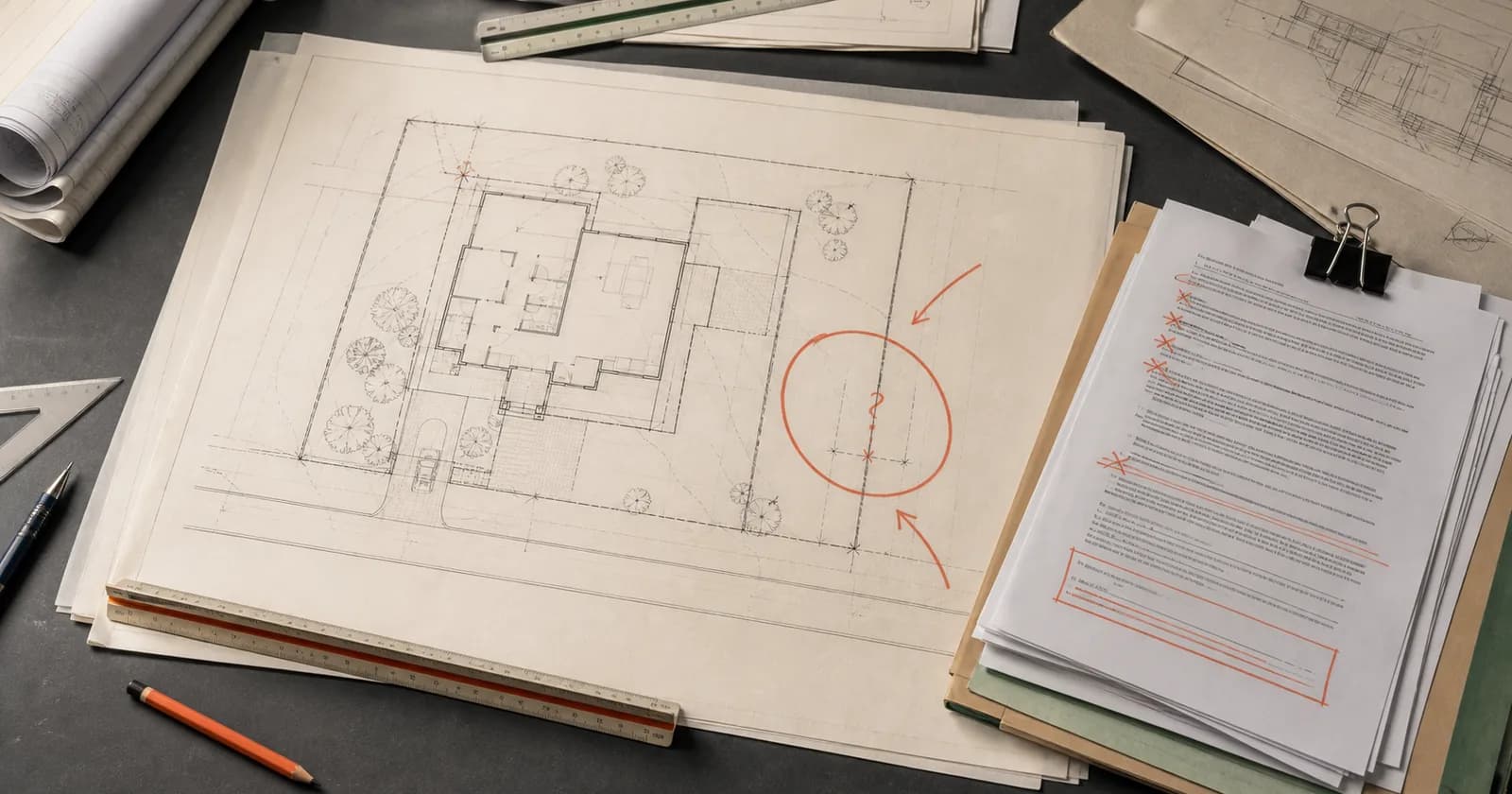
Most setback trouble starts on a Saturday, with somebody standing in a backyard, hooking a tape to the chain link, walking it out, and writing a number on the back of an envelope. That number then travels. It lands on a site plan, then in a concrete order, then under a footing. Nobody questions it, because it was measured. It just was not measured from the right thing.
A setback is the minimum distance a structure has to keep from a lot line. Not the fence. Not the curb, the sidewalk, the hedge, or the line where your mowing stops and the neighbor's starts. The lot line is a legal boundary that exists on a recorded document and, on most residential lots, is physically marked by iron pins driven at the corners and buried a few inches under the sod.
Everything below follows from that one sentence. Get the reference line wrong and every number downstream is wrong by exactly the same amount, including the ones a reviewer checks against a survey.
The reference line is the part people get wrongThe reference line is the part people get wrong
Fences drift. They get built to somebody's best guess, replaced along the old post holes forty years later, or set deliberately a foot inside the line so the posts are easier to dig without starting an argument. Occasionally they sit over the line entirely. A fence is proof of where a fence is, and nothing beyond that.
The front of the lot is worse, because the error runs in one direction every time. The public right-of-way normally extends past the curb, past the parkway strip, past the sidewalk, and several feet into what reads as your front lawn. The front lot line sits at the edge of that right-of-way, not at the pavement. Measure from the curb and you have quietly handed yourself distance you do not own.
Front, side, and rear are three separate numbersFront, side, and rear are three separate numbers
Zoning ordinances set a different minimum for each yard, and a corner lot adds a fourth condition on top of the three.
| Yard | What the ordinance is doing with it |
|---|---|
| Front | One of the two larger numbers. Streetscape work, holding a consistent building line down the block. |
| Side | Almost always the tightest of the three. |
| Rear | The other of the two larger numbers. Privacy and drainage duty instead. |
| Corner side | Only on a corner lot, where the ordinance uses one. Larger than an interior side yard, smaller than a full front setback. |
The numbers themselves change by zoning district, including which of the two larger ones comes out bigger, which is why the zoning permit question gets answered before anyone talks about framing.
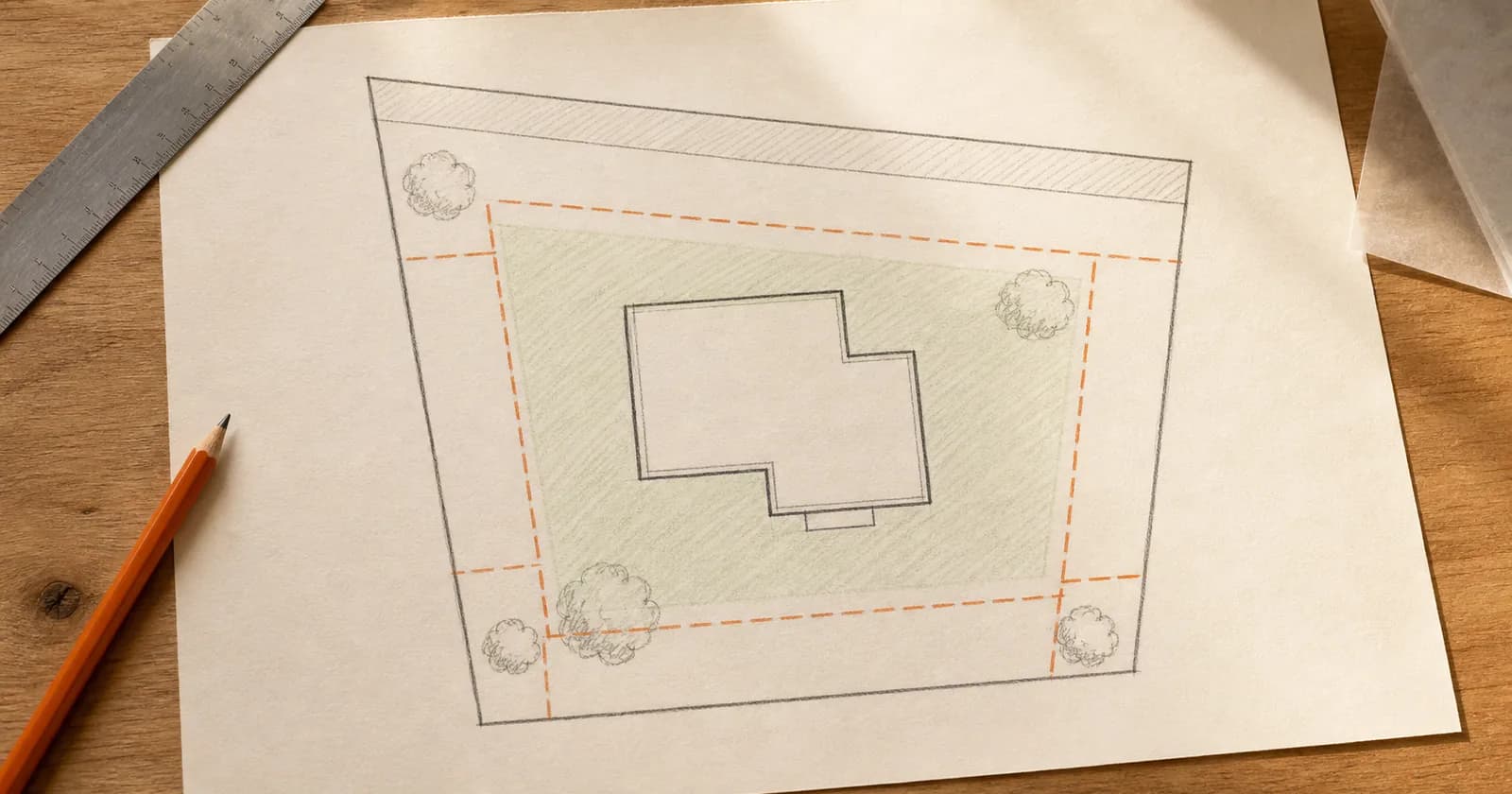
Subtract those minimums from the lot and what remains is the building envelope, the area where a structure is actually allowed to sit. Lot coverage and impervious surface limits then cap how much of that envelope you can fill, which is why a large patio can matter to a zoning reviewer even when it triggers no structural review.
Accessory structures play by their own numbersAccessory structures play by their own numbers
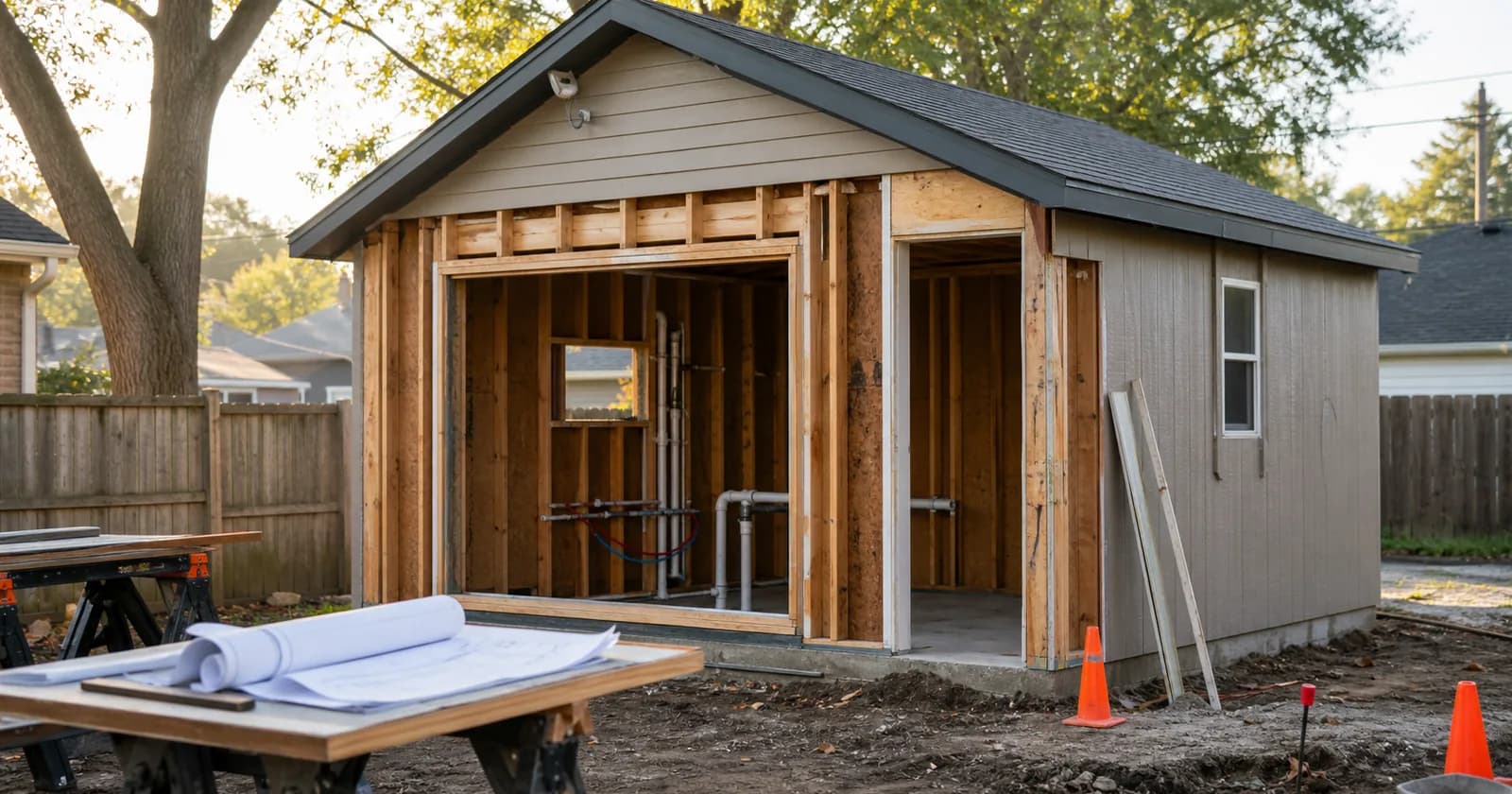
Sheds, detached garages, carports, gazebos, and pool equipment pads are generally classified as accessory structures, and most ordinances give them a separate line in the setback table. The usual pattern is a smaller side and rear setback than the house gets, paired with stricter placement rules:
- Prohibited in the front yard entirely
- Required to sit behind the rear wall line of the principal building
- Held to a minimum separation distance from the dwelling
- Capped at a lower maximum height
That combination is why a carport is often the hardest accessory structure to place. It wants to be next to the driveway, and the driveway usually wants to be in the front yard.
Nobody in that sequence was careless. The tape was accurate and the site plan matched field conditions exactly. The one input nobody verified was the boundary, and it was the only one that mattered.
The correction is where the money goes. A variance goes to a zoning board of appeals and generally has to show a hardship tied to the property rather than one the owner created. A slab poured two feet into a required yard is self-created by definition.
Corner lots come with two front yardsCorner lots come with two front yards
A corner lot has two street frontages. Some ordinances apply the full front setback to both, others the reduced corner side setback to the street side. Either way, the lot loses buildable width.
Which frontage counts as the front is its own question, and the ordinance can tie it to the address, the narrower frontage, or the orientation of the block. Sight triangle rules near the intersection then cap the height of fences, walls, and plantings so drivers can see across the corner.
Easements sit on top of setbacks, not inside themEasements sit on top of setbacks, not inside them
An easement is a recorded right for somebody else to use a defined strip of your lot. Four kinds turn up on residential parcels.
| Easement | Where it runs |
|---|---|
| Utility | Five to ten feet along the rear and side lot lines. The common residential case. |
| Drainage | At low corners |
| Sanitary | Over a main |
| Access | Serving a parcel behind you |
The mistake is treating an easement as part of the setback. They are independent restrictions, and the more limiting one controls. A five foot rear setback with a ten foot rear utility easement means you are working from ten feet. Most easement language bars permanent structures outright, and where something is allowed, the holder keeps the right to excavate through it with no obligation to rebuild what came out.
Because easements are recorded, they are drawn on the survey. That is the strongest argument for starting from a current plat of survey rather than a hand sketch of the yard.
Eaves, gutters, and what counts as the structureEaves, gutters, and what counts as the structure
Setbacks are measured to the closest point of the structure. Ordinances disagree about which point that is.
Some measure to the foundation or the exterior wall, then allow a defined projection into the required yard: a couple of feet for eaves and gutters, sometimes a separate allowance for chimneys, bay windows, window wells, and mechanical equipment. Others measure to the drip line, so a two foot overhang eats two feet of setback. Same building, same lot, opposite answer.
That distinction decides real projects. An air conditioner condenser tucked into a narrow side yard either fits inside an equipment allowance or violates the side setback. A deck cantilever and a garage with generous eaves sit on the same question.
The building code then weighs in separately from zoning. Walls and projections close to a lot line can trigger fire separation requirements no matter what the setback table permits. Zoning signing off on placement is not the building department signing off on the wall assembly, and that gap is one of the quieter reasons permits come back with corrections.
What to have in hand before you stake anythingWhat to have in hand before you stake anything
- A current plat of survey showing lot dimensions, lot lines, and every recorded easement
- The setback numbers for your zoning district, plus the separate accessory structure numbers
- Which lot line the ordinance treats as the front, especially on a corner or through lot
- The measuring convention: foundation, exterior wall, or drip line, and any allowed projection
- Property pins located and flagged, or a stakeout by a licensed land surveyor
- A scaled site plan dimensioning the structure to each lot line and easement edge
Only three of those are reading. One is a survey you either already have or need to order. One needs boots in the grass, and it costs a can of marking paint or a short surveyor visit. The last one is a drawing.
Where the number gets verifiedWhere the number gets verified
Setbacks are among the cheapest things to confirm in advance and the most expensive to correct after concrete. The confirmation itself is unglamorous. Find the district, read the accessory structure line and the projection allowance, pull the easements off the survey, then draw it to scale.
That verification is the work Permitech does. We resolve which lot line the ordinance treats as the front, which setback table applies to an accessory structure on your parcel, and whether your jurisdiction will accept the survey already in your closing folder, before a stake goes in the ground. As the permit intelligence ecosystem for construction, that answer is verified by a human permit technician rather than scraped and handed over.
Placement is the one decision the permit process will not let you take back cheaply. If you would rather have the reading done for you, see what a Permit Package includes, or start with the Illinois permit guide.