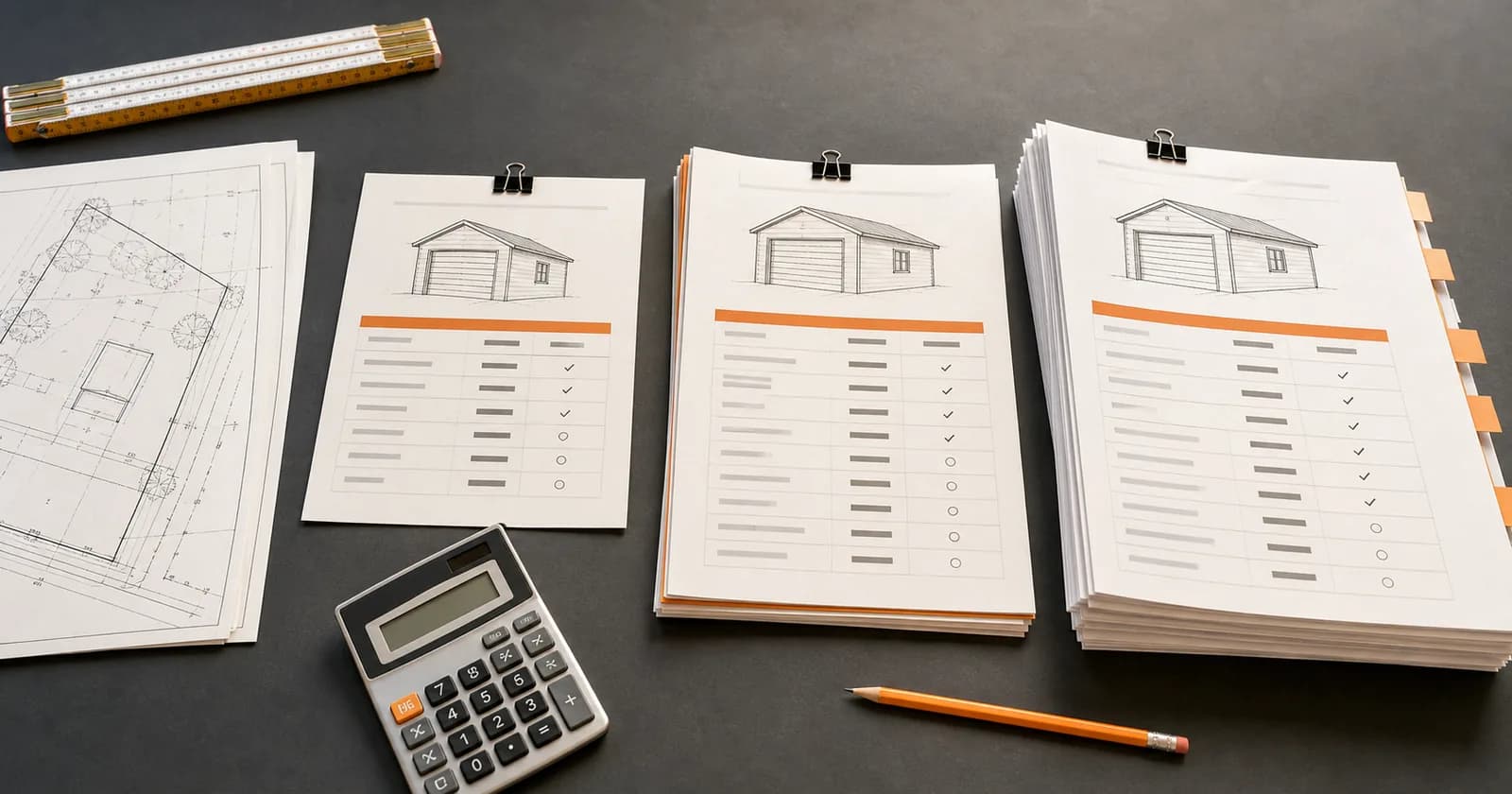
Three quotes land for the same detached garage. Sixty dollars. Two hundred. Twelve hundred. The garage did not change. The lot did not change. The building department on the other end did not change either.
That spread confuses people, and it should. Permit help is one of the few line items in residential construction where price tells you almost nothing about what you get. A cheap package can hand you exactly the right answer and leave the filing on your desk. An expensive one can hand you somebody who knows the counter staff by name but never checked whether your slab clears the side yard setback.
So the useful question is not what permit services cost. It is which portion of the work you are buying, and who absorbs the portion you are not.
What the money is actually buyingWhat the money is actually buying
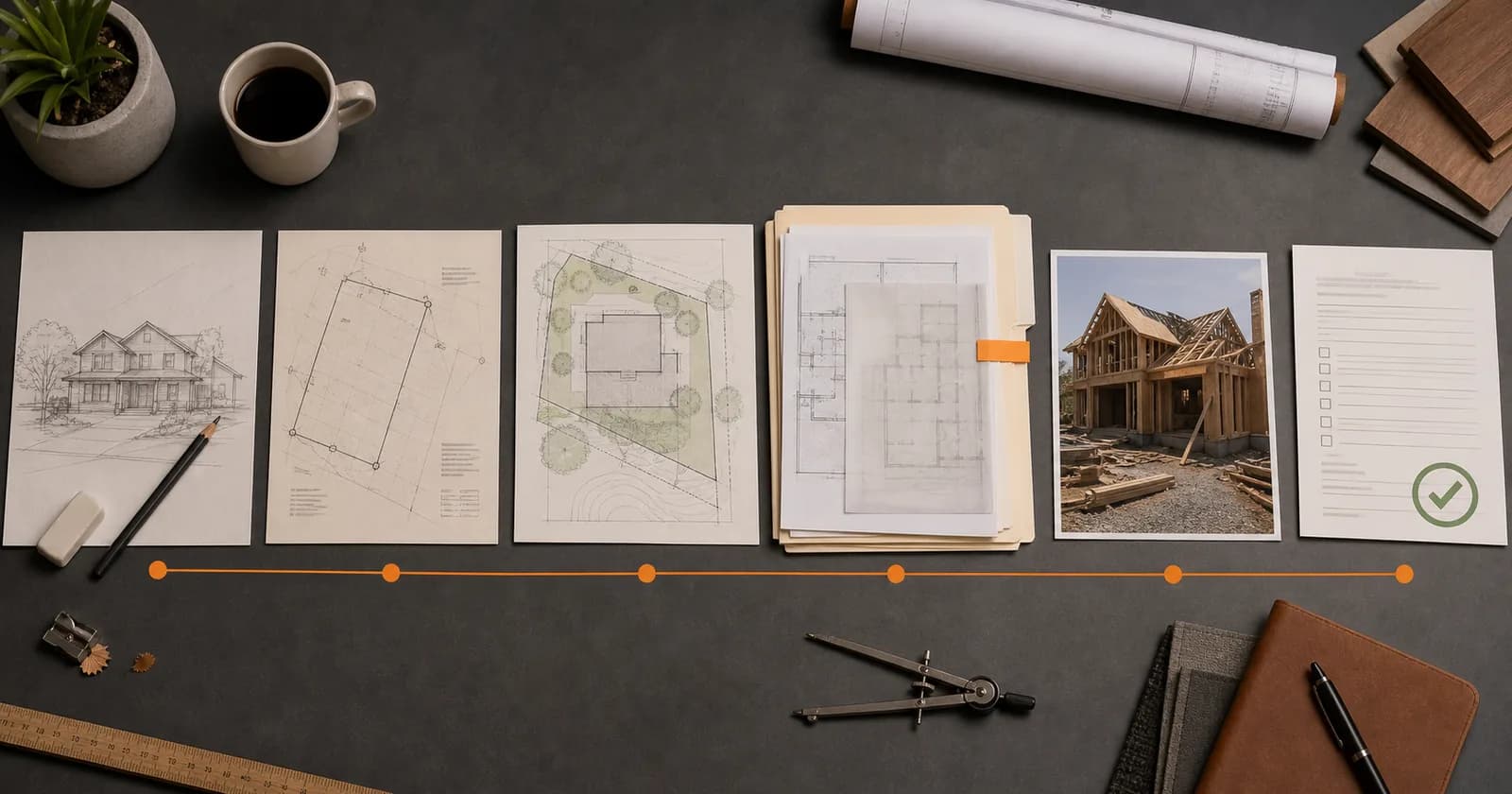
Every residential permit runs through the same four blocks of work, whether a homeowner does it at the kitchen table or a service does it for a fee.
- Research. Which jurisdiction has authority, whether the project needs a permit at all, and what the zoning and structural requirements are at that address.
- Documents. The survey, the site plan, the drawings, contractor license and insurance on file, energy forms, owner authorization.
- Submittal. Getting the packet into the right intake path with the right fee and application form.
- Follow-up. Reviewer comments, corrections, resubmittals, and inspection scheduling after issuance.
Price a permit service by which of those four it owns. Everything else is marketing. A sixty dollar product that nails step one is a different purchase than a twelve hundred dollar coordinator who starts at step three.
It helps to see the three numbers side by side, because people routinely quote one when they mean another. The municipal permit fee is not the service price, and neither is the value of the work being permitted.
$325
Median municipal permit fee
Chicago issued permits, 2025. Paid to the department, not to a service.
$9,500
Median reported job value
Cook County assessor permit records, 2025
$500-$2,500
Expediter service range
Permit Place published residential cost guide
Source: Permitech analysis of the City of Chicago Building Permits and Cook County Assessor Permits datasets, 2025
Analysis by Permitech
Read left to right, the shape of the problem appears. A median residential job carries a permit fee in the low hundreds, and the highest-priced service path can exceed that fee several times over. That is not automatically wrong, since the fee buys review and the service buys labor and risk transfer. It does mean the service decision deserves more scrutiny than the fee does, because the service is the larger and more variable number.
The four things that move the priceThe four things that move the price
Project type. A fence or a roof replacement usually runs one review path with a short document list. A deck pulls in zoning review, footing depth, guard and stair details, and almost always a site plan. A whole-house remodel can trigger separate electrical, plumbing, and mechanical permits, each with its own reviewer, fee, and inspection sequence. More review paths means more places to stall.
Jurisdiction complexity. Two houses four miles apart can answer to entirely different authorities having jurisdiction, with different forms, different portals, and different triggers for zoning approval versus building review. One department issues clean residential packets from a counter in a morning. Another routes the same project through zoning, engineering, and a stormwater desk. That gap is invisible from the street, and it is the single biggest reason two identical projects cost different amounts to permit. Coverage across Illinois, Wisconsin, and Indiana runs past 7,000 jurisdictions, and no two want the packet assembled the same way.
Document acquisition. The quiet budget line. If you already have a plat of survey in the closing folder, your site plan is a drafting exercise. If you do not, you are ordering one from a licensed surveyor and waiting on their schedule. Truss letters and engineered details work the same way: cheap when they exist, slow when they do not.
Post-submittal follow-up. Hours hide here. One reviewer comment can mean a redrawn sheet, a resubmittal, and another turn in the queue. Services that price low almost always stop before this step, which is fine as long as you know it and painful when you find out in week five. The real cost of permit delays is rarely the permit fee.
Path one: verified requirements, filed by youPath one: verified requirements, filed by you
You buy the answer and do the paperwork. For Permitech that is the Permit Package at $60 for the project: whether a permit is required with the citation behind it, the full zoning and structural requirement set, an action plan, a Permit Application Reference Sheet you copy onto the building department's own form, and a Permit Workspace to track documents and tasks until it is issued. Site plans are an add-on when the department wants one.
AI drafts a requirement set in roughly three to five minutes and a full set lands in about half an hour. A human permit technician then verifies it, one to four hours, before anything is treated as confirmed.
When this is the wrong choice: when you cannot be at a counter during business hours, when the project spans multiple trades with staggered submittals, or when your crew hours are worth more than the fee difference. Buying the right answer does not help if the packet sits on your desk for three weeks.
Path two: managed filingPath two: managed filing
Someone else prepares the packet, submits it through the correct intake path, works the reviewer comments, and stays on the file until approval. Done-for-you filing starts at $199 per project with the research included, which is the pricing shape most managed residential filing follows. Contractors with steady volume run the same work as a retainer through Permit Concierge instead.
The value concentrates in step four. If your jurisdiction runs a portal you have never used, or the project touches zoning, building, and a separate right-of-way permit for a driveway apron, handing off the coordination beats learning it once.
When this is the wrong choice: a straightforward shed or fence in a jurisdiction with a same-day counter. Paying someone to walk a two-page application into a department that would have issued it while you waited is the wrong product for that job.
Path three: the traditional expediterPath three: the traditional expediter
Permit Place, one of the larger expediting firms, publishes a residential range of $500 to $2,500 per project in its own cost guide. That is the number worth anchoring on, because it comes from an expediter rather than from someone selling against one.
What that buys is relationships and counter time, a model built for commercial and multi-family work where the bottleneck genuinely is the queue. On a single-family accessory structure it almost never is, which is the whole argument for an expediter alternative. Paying $2,500 to hand-carry a shed application is not a bad deal because the firm is bad at its job. It is a bad deal because you bought queue management for a problem that was never the queue.
When this is the wrong choice: most residential work, and any project where nobody independently verified the requirements first. Speed applied to a wrong packet gets you corrected sooner.
Comparing the three without the sales pitchComparing the three without the sales pitch
| What you get | Verified requirements | Managed filing | Traditional expediter |
|---|---|---|---|
| Typical price | Under $100 / project | Low hundreds / project | $500–$1,500 / permit |
| Research owned by | Provider | Provider | You or your architect |
| Documents assembled by | You | Provider | Usually you |
| Filed by | You | Provider | Provider |
| Reviewer follow-up | You | Provider | Provider |
| Best fit | Simple project, time to file | Multi-trade or unfamiliar AHJ | Commercial, multi-family, real queue problems |
The municipal permit fee sits outside this table in every case. It is set by ordinance and it goes to the jurisdiction. Nobody in the private market can discount it, and a quote implying otherwise deserves a second look.
Contractor math: the permit line versus the lane costContractor math: the permit line versus the lane cost
For a contractor this stops being a purchase and becomes a margin question.
Most residential contractors already bill permit handling as a line on the contract. Call it a couple hundred dollars per job, which homeowners expect and rarely argue about. Run six permits in a month and that line is real revenue against a fixed cost. Team plans start at $249 a month, which two billed permits generally cover. The rest runs at margin.
The alternative growing companies consider is hiring. A dedicated permit coordinator lands somewhere in the $45,000 to $65,000 range in salary before benefits, and that person can only stand in one building department at a time. Compare against that number, not another vendor's sticker.
A second line item never shows up on an invoice: quoting accuracy. A deck builder who knows the setback and footing requirements before the estimate goes out prices the job correctly. One who finds out at review eats the difference or has an uncomfortable conversation. A packet drawn to a setback nobody verified comes back as a correction, and on a real dimensional miss it becomes one of the reasons permits get denied. Both are preventable at the quoting stage.
Questions that expose the real priceQuestions that expose the real price
Before you hand anyone a card, make them answer these. Vague quotes fall apart fast.
- Which of the four steps do you own: research, documents, submittal, follow-up?
- Do you verify the jurisdiction for this specific address, or do I tell you which one it is?
- Is a site plan or survey included, or is it an add-on I pay separately?
- What happens if the reviewer sends corrections? Is the resubmittal included or billed again?
- Does your fee include the municipal permit fee, or is that a separate bill from the department?
- How do I see status without calling you?
If a provider owns research and follow-up, the price should reflect it. If they own neither, you are buying a courier and should pay courier prices.
The project permit guides are the right first stop if you are still working out which permit the project even needs.